Cotton Inspector Gloves, Canvas and Knit Gloves: Which to Use
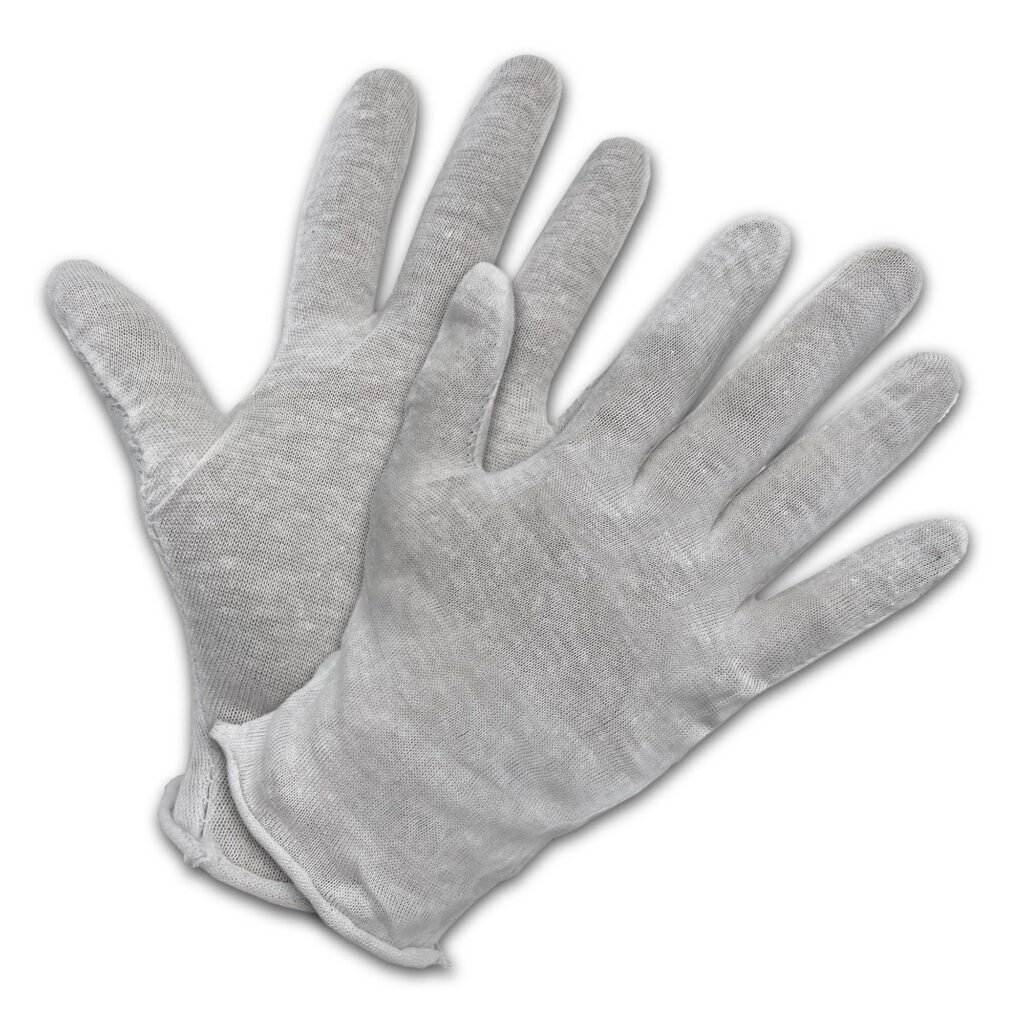
Lightweight fabric gloves are some of the cheapest and most useful gloves you can stock. They keep fingerprints off finished products, protect hands from dust and splinters, and make rubber gloves more comfortable when worn underneath. Here’s how the main types differ, so you buy the right one for each job.
The options at a glance
| Glove | Feel | Best for |
|---|---|---|
| 100% cotton inspector | Softest, most absorbent | Inspection, delicate items, liners, overnight hand care |
| Polyester-cotton inspector | Soft, longer-lasting | Inspection and assembly with more wear and washing |
| Cotton canvas drill | Heavier woven fabric | Splinters, rough edges, yard and stock-room work |
| String knit (cotton blend) | Light, breathable | General handling, packing, liners |
| Nylon string knit | Light, dries fast | Wet and outdoor work, fishing, farms |
| String knit with PVC dots | Grippy palm | Boxes, order picking, moving |
Inspector gloves: cotton or poly-cotton?
Inspector gloves are thin white gloves that stop skin oils and fingerprints from marking glass, metal, photos, jewellery and finished parts. White also shows dirt, so you can see when a pair needs changing.
- 100% cotton is the softest and most absorbent, and the cheapest per pair. Examples are Men's 100% Cotton Light Weight Inspector Gloves and Lady's 100% Cotton Light Weight Inspector Gloves.
- Polyester-cotton holds up better through repeated wear and washing. Examples are Men's Polyester-cotton Inspectors Gloves w/ Knit Wrist and Lady's Polyester-cotton Inspectors Gloves w/ Knit Wrist.
Both come in men’s and lady’s sizes. Lady’s sizes fit smaller hands, so they suit anyone whose standard gloves feel baggy at the fingertips.
Canvas drill gloves
Cotton Canvas Drill Gloves w/ Knit Wrist are made of woven cotton canvas, which is tougher than knit. They resist splinters, rough edges and dirt, while staying breathable, so they’re a dependable low-cost glove for gardening, stock rooms, painting and general maintenance.
String knit gloves
String knit gloves are the classic budget work glove. Fisherman String Knit Gloves are a breathable cotton blend, cheap enough to treat as disposable. Premium Fisherman Nylon String Knit Gloves 10 gauge are nylon, which stays lighter, dries faster and keeps its shape when wet. For carrying boxes all day, String Knit Gloves with PVC Dots Palm add PVC dots for grip, which reduces dropped items and hand fatigue.
Using fabric gloves as liners
A thin cotton or knit glove under a rubber, nitrile or PVC glove absorbs sweat and adds a little warmth. It makes long shifts in wet or cold work much more comfortable. Change liners when they get damp. Liners pair well with reusable chemical gloves (see chemical-resistant gloves) and with mesh gloves in meat cutting (see stainless steel mesh gloves).
What fabric gloves don’t do
- Liquids and chemicals: cloth soaks up liquids and holds them against the skin. Use a coated or chemical-resistant glove instead. See coated work gloves.
- Cuts: fabric gloves don’t stop blades or sharp sheet metal. See cut-resistant gloves.
- Heat: thin gloves aren’t oven gloves. See heat-resistant gloves.
- Machinery: loose gloves can be caught by rotating parts such as drills and lathes. Follow your workplace’s rules for machine work.
Washing
Cotton, poly-cotton and canvas gloves can be washed in warm water with mild detergent, then air-dried or tumble-dried on low. Expect pure cotton to shrink a little after the first wash. Knit gloves are cheap enough that most workplaces replace them when they’re dirty.
Buying tip
These gloves are sold by the dozen pairs, and full cases hold hundreds of pairs, so cost per pair is very low. Keep a box at each workstation so people grab a fresh pair rather than working barehanded.