Dressing for Cold Storage and Freezer Work: A PPE Guide
Walk-in coolers, blast freezers, refrigerated docks and outdoor yards in January all have one thing in common: cold slows hands down, numbs feet and makes people careless. Good cold-weather PPE keeps workers comfortable enough to stay focused. This guide covers what to wear from head to toe.
Cold and wet is the real problem
Dry cold is manageable with layers. Cold plus water is far worse, because wet skin and clothing lose heat quickly. In food plants, fish processing and washdown areas, waterproof protection matters as much as insulation.
Layering basics
- Base layer: moisture-wicking fabric next to the skin. Avoid cotton, which holds sweat.
- Middle layer: insulation, such as fleece.
- Outer layer: wind and water resistant. In food areas, a waterproof apron such as TPU Reusable Apron goes on top.
Layers let workers adjust as they move between a freezer and a warm dock.
Head and face
A lot of body heat is lost from the head and neck. A SoftCover® Balaclava Hood covers the head, neck and sides of the face. In food areas it also keeps hair contained. Add a hard hat liner where hard hats are required.
Hands
| Conditions | Glove | Example |
|---|---|---|
| Dry cold, outdoor handling | Thermal-lined coated glove | Latex 1/2 Coated Thermal Winter Gloves Blue On Green |
| Cold and wet, light chemicals | Flock-lined nitrile | Green-Touch+ Nitrile Reusable Flock Lined Gloves 15mil |
| Cold water, brine, ice | Foam-insulated neoprene | Showa Neoprene Gloves, Rough Finish, Foam Insulated, 12", Black, Showa Neoprene Gloves, Rough Finish, Foam Insulated, 18", Black |
| Reaching into deep cold tanks | Long insulated neoprene | Showa Neoprene Gloves, Rough Finish, Foam Insulated, 26", Black |
| Extra warmth under rubber gloves | String knit liner | Fisherman String Knit Gloves |
Keep spare gloves warm and dry near the work area. Damp gloves are cold gloves, so change them as soon as they get wet inside.
Feet
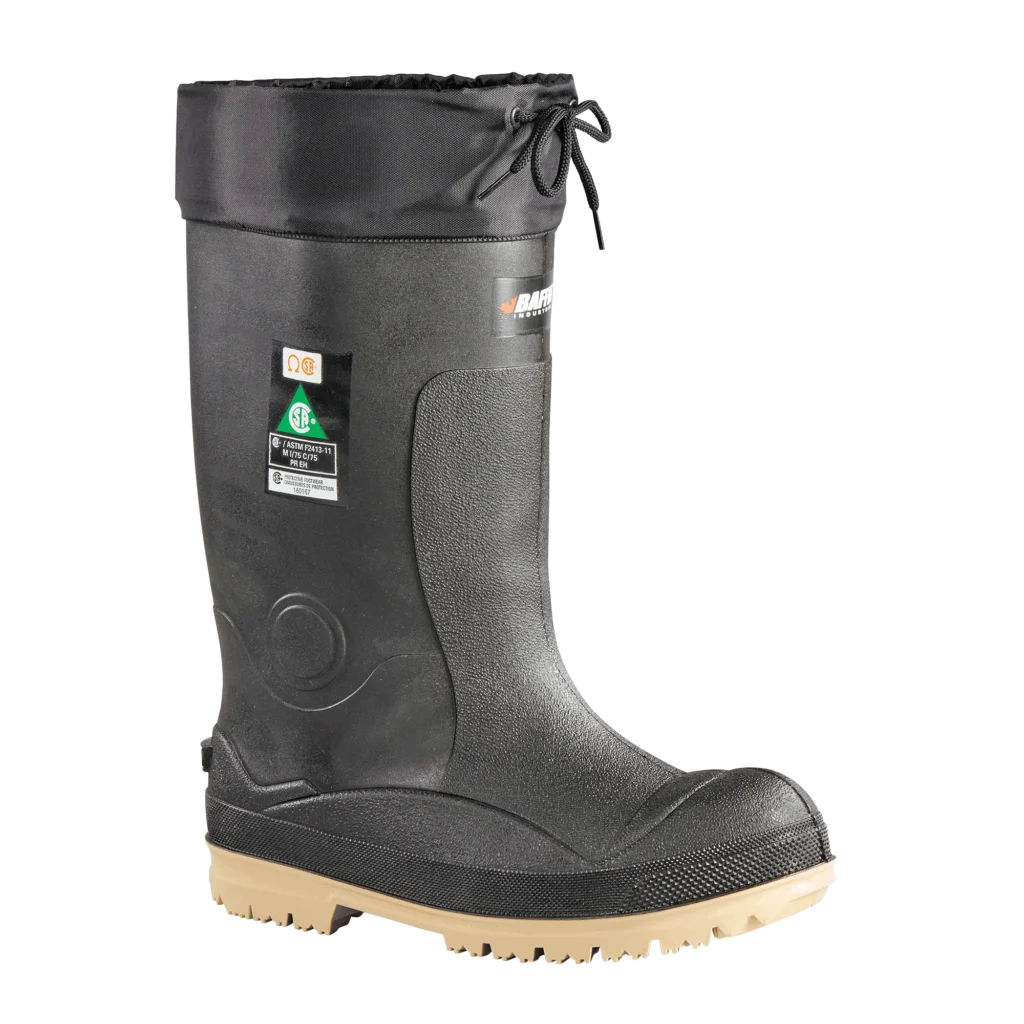
Cold feet are a common complaint and a real hazard, because numb feet slip more easily. Choose an insulated, waterproof safety boot with a safety toe and plate:
- Baffin TP Boots Waterproof & Cold Comfort,Slip-Resistant, Safety Toe and Plate: waterproof and slip-resistant for everyday winter work.
- Baffin TITAN Insulated Boots, Safety Toe and Plate, Rubber Outsole: built for extreme cold, such as long shifts in freezers or outdoors.
- Baffin UltraFlex Boots, Electric-Shock & Slip-Resistant, Safety Toe and Plate: slip-resistant and electric-shock resistant, with colours that suit food plants.
Wear wool or synthetic socks, not cotton, and give boots time to dry fully between shifts. For more on boot materials, see our safety boots for wet work guide.
Floors and standing
Workers who stand in one spot in the cold, such as packers on a refrigerated line, lose heat through their feet. An Anti-Fatigue Mat adds a layer between the boot and a cold concrete floor and reduces fatigue.
Warning signs to watch for
- Shivering, numb fingers or clumsy hands.
- Pale or waxy patches of skin on fingers, ears or the face.
- Confusion, slurred speech or unusual tiredness.
Anyone with these signs should go to a warm area straight away. Schedule regular warm-up breaks for people working in freezers, and use a buddy system for long tasks.
Frequently asked questions
Should freezer gloves be waterproof?
If workers handle wet or frozen product, yes. Frost melts on contact with a warm hand and soaks through fabric gloves quickly.
Do I need a different boot for a freezer than for outdoors?
Both need insulation and a slip-resistant sole. For very long periods in deep cold, pick a boot built for extreme cold, such as Baffin TITAN Insulated Boots, Safety Toe and Plate, Rubber Outsole.
Is a balaclava allowed in a food plant?
Yes. A disposable balaclava hood is designed for food and clean areas, and it covers hair as well. Check your plant’s hair and beard cover rules too, in our hair cover guide.