Coated Work Gloves: Latex vs Nitrile vs PU Palm Coatings
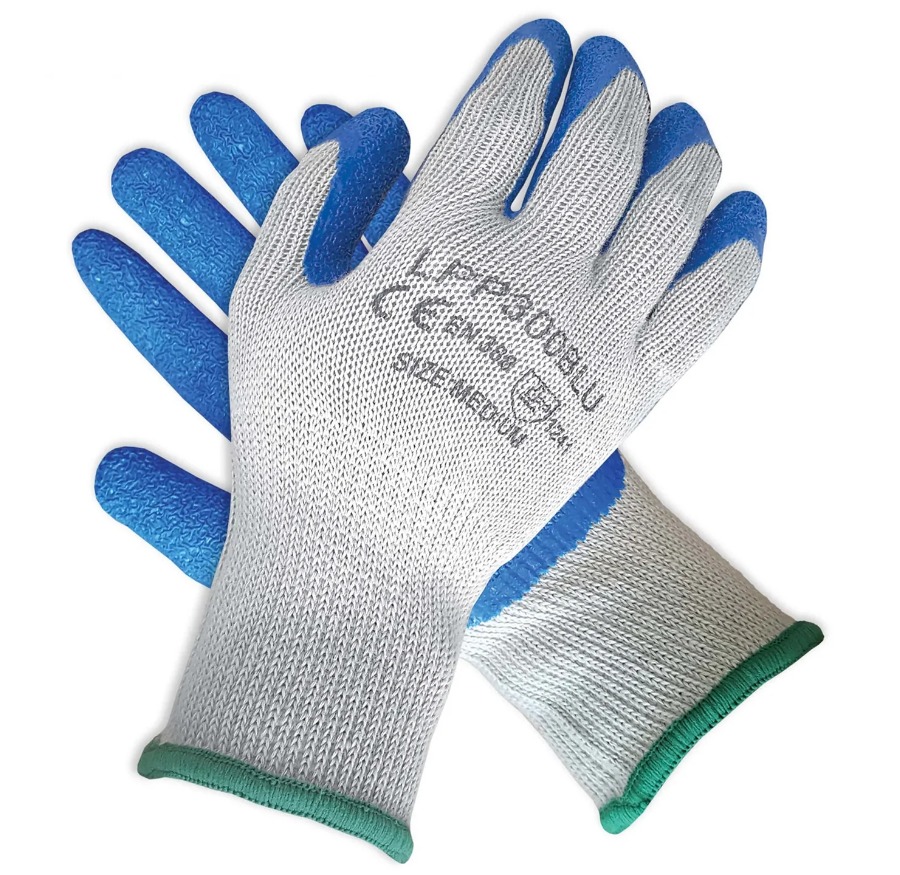
Coated work gloves are the everyday glove for warehouses, shipping, assembly, landscaping and construction. A knit liner keeps the hand cool and flexible, and a rubber or plastic coating on the palm adds grip and wear resistance. The coating you choose changes how the glove performs, so it is worth getting right.
Three coatings at a glance
| Coating | Best at | Less good at | Examples |
|---|---|---|---|
| Latex | Grip on rough, wet and heavy materials; very flexible | Oil; latex allergies | Latex 1/2 Coated Work Gloves Blue On Grey, Latex 1/2 Coated Thermal Winter Gloves Blue On Green |
| Nitrile | Oily and greasy parts; abrasion resistance | Slightly less stretchy than latex | Nitrile 1/2 Coated Nylon Gloves Black, 15G Nylon/Spandex Shell Nitrile Micro Foam Palm Coated Gloves, Nitrile Fully Coated Gloves With Safety Cuff Blue |
| PU (polyurethane) | Fine assembly, thin and precise feel, low residue | Heavy, wet or rough work | PU 1/2 Coated Nylon Gloves Black, PU 1/2 Coated Nylon Gloves White |
Latex coating
Latex has a natural tackiness that holds onto bricks, lumber, stone and wet cardboard. It is the go-to for landscaping, masonry and general labour. The thermal-lined Latex 1/2 Coated Thermal Winter Gloves Blue On Green is a good pick for outdoor work in a Toronto winter. Avoid latex if anyone on the team has a latex allergy, and do not use it around oils, which soften it.
Nitrile coating
Nitrile resists oil and grease and stands up to abrasion. That makes it the default for automotive work, machine shops and handling oily parts. Options include:
- Palm coated (Nitrile 1/2 Coated Nylon Gloves Black): grip and breathability for general handling.
- Foam palm on a thin liner (15G Nylon/Spandex Shell Nitrile Micro Foam Palm Coated Gloves): the foam soaks up light oil like a sponge, so grip stays good. The 15-gauge shell gives excellent feel for all-day assembly.
- Fully coated with a safety cuff (Nitrile Fully Coated Gloves With Safety Cuff Blue): keeps liquids and dirt off the back of the hand too. The safety cuff slips off easily if the glove gets caught.
- Impact protection (Showa Nitrile Coated Gloves with TPR Bumpers): TPR bumpers on the back of the hand for pipe work and heavy lifting.
PU coating
Polyurethane coatings are thin and light. They give the best fingertip feel of the three and leave very little residue, which helps in electronics, packaging and finishing work. Choose black (PU 1/2 Coated Nylon Gloves Black) to hide dirt, or white (PU 1/2 Coated Nylon Gloves White) to show when a glove needs changing and to keep finished products clean.
What “gauge” means
Gauge is the number of stitches per inch in the knit liner. A higher number means a thinner, finer knit.
- 7 to 10 gauge: thicker and tougher, with more cushioning. Good for heavy handling.
- 13 to 15 gauge: thin and close-fitting. Best for dexterity and small parts.
Uncoated options
Not every job needs a coating:
- String knit gloves (Fisherman String Knit Gloves) are cheap, washable and work well as liners under rubber gloves in the cold.
- String knit with PVC dots (String Knit Gloves with PVC Dots Palm) add a bit of grip for boxes and cartons.
- Nylon knit (Premium Fisherman Nylon String Knit Gloves 10 gauge) keeps its strength when wet, so it suits fishing and farm work.
- Cotton canvas (Cotton Canvas Drill Gloves w/ Knit Wrist) suits yard work and general handling where grip matters less.
Getting the fit right
A glove that is too big snags and slips. A glove that is too small tires the hand and splits. Most of our coated gloves come in S to XL, and some go to XXL. Measure around the knuckles of the dominant hand, and stock at least three sizes so everyone gets a proper fit.
When a coated glove is not enough
Standard coated gloves are not rated for cuts, chemicals or heat. For sharp edges, use a cut-rated glove (see our cut levels guide). For chemicals, see our chemical-resistant gloves guide.
Frequently asked questions
Can coated gloves be washed?
Many can be hand washed in mild soapy water and air dried. Do not tumble dry, because heat damages the coating.
Which coating is best for cold weather?
A thermal-lined latex glove such as Latex 1/2 Coated Thermal Winter Gloves Blue On Green stays flexible and grippy in the cold. For cold and wet work, see our cold storage PPE guide.
Why buy by the dozen?
Work gloves wear out. Buying by the dozen keeps the cost per pair down and makes sure there is always a fresh pair at hand.