Hair Nets, Bouffant Caps, Beard Covers and Hoods for Food Safety
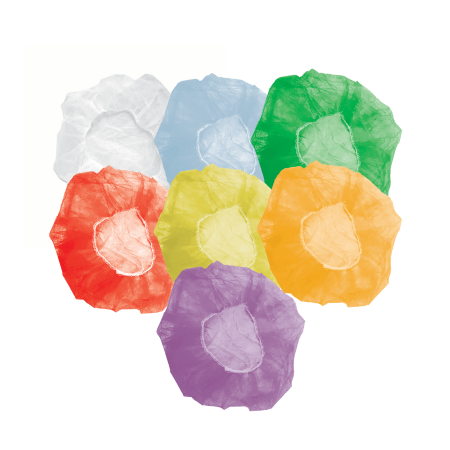
A single hair in a customer’s meal can cost a restaurant a review and a food plant a recall. Hair coverings are cheap, but only if people actually wear them, and wear them properly. That depends on choosing a style and size that is comfortable for your team.
The main styles
| Style | Pros | Best for |
|---|---|---|
| Nylon mesh hairnet | Cool, discreet, durable | Hot kitchens, bakeries, front of house |
| Bouffant cap | Full coverage, roomy | Food plants, hospitals, labs |
| Pleated cap | Neat look, sits close | Healthcare, cafeterias |
| Balaclava hood | Covers neck and sideburns too | Cleanrooms, high-risk processing |
Mesh hairnets
StrongNets nylon mesh hairnets are stronger than lightweight nets and let heat escape, which kitchen staff appreciate. They come in black in 21-inch, 24-inch and 28-inch sizes. Mesh covers less than a cap, so check that it meets your food safety program.
Bouffant and pleated caps
Bouffant caps are fuller and roomier. Pleated caps look neater and sit closer to the head. Both contain hair well, so the choice is mostly about look and comfort.
- SoftCover bouffant caps in 21-inch, 24-inch, 26-inch and 28-inch, in up to seven colours.
- Pleated caps, 21-inch and 24-inch in white or blue.
- Premium Cap, 21-inch and 24-inch in five colours.
Size chart
| Size | Fits |
|---|---|
| 21 in | Short hair |
| 24 in | Most adults (the safest size when buying for a team) |
| 26 in | Long or thick hair |
| 28 in | Very long, thick or braided hair, and over head coverings |
Having 28-inch caps on hand means staff who wear a hijab or turban, or have a lot of hair, can follow hygiene rules comfortably.
Beard covers
Most food safety programs require a beard cover for anyone with facial hair, including stubble. Wear it together with a hair cover.
- SoftCover® Beard Covers 18" (regular) and SoftCover® Beard Covers 21" in breathable polypropylene with elastic straps.
- Beard Covers, Ear-Loops Style, White (2 strgins wearing over ears), which go on in seconds like a face mask.
- StrongNets Nylon Mesh Beard Covers, a cooler mesh option that matches StrongNets hairnets.
Balaclava hoods
A regular cap can leave hair at the neck and sideburns uncovered. The SoftCover® Balaclava Hood covers the head, neck and sides of the face, leaving an opening for the face. It is used in cleanrooms, pharmaceutical work and high-risk processing, and to keep dust and overspray off the skin.
Wearing a hair cover properly
- Tie long hair back or clip it up first.
- Pull the cover down to cover the hairline at the forehead, the ears and the nape of the neck.
- Put on a fresh cover each shift, or whenever one gets dirty or torn.
Colour-coding
Many plants give each department or visitor group its own cap colour, for example white for production, blue for maintenance and red for visitors. Supervisors can then see at a glance who belongs in each area.
Frequently asked questions
What size hair cover should I buy for my whole team?
24 inches fits most adults. Keep a bag of 28-inch caps for long or thick hair.
Are mesh hairnets enough for food safety?
Many kitchens use them, but some programs require full-coverage caps. Check your food safety plan.
Do I need a beard cover if I have stubble?
Most food safety programs say yes.