Safety Boots for Wet Work: PVC, PU and Rubber
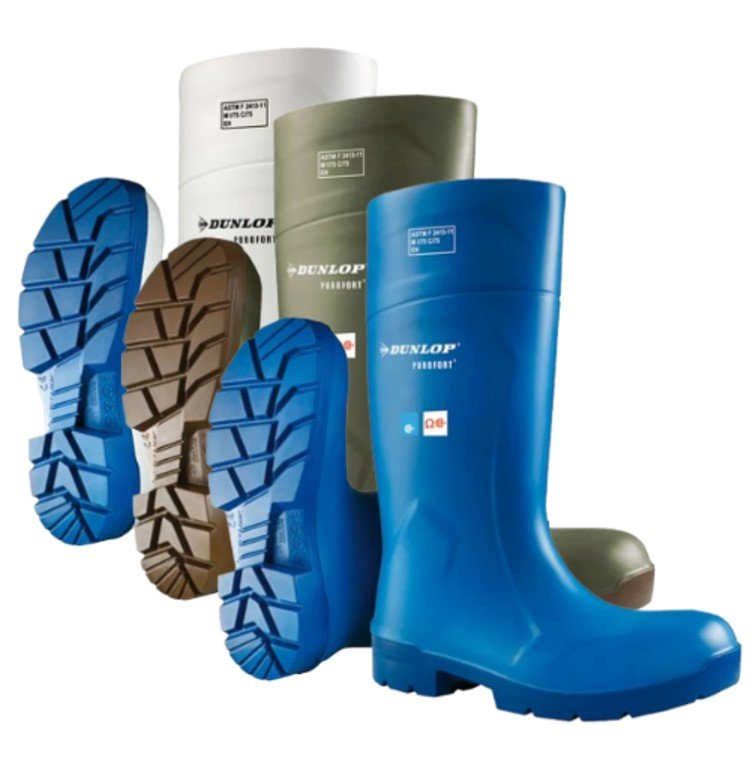
In food plants, farms, car washes and on wet job sites, feet are wet all day. A waterproof safety boot keeps them dry and protected from impacts and punctures. The main choice is the material: PVC, PU or natural rubber.
PVC vs PU vs rubber
| Material | Strengths | Watch out for | Our boots |
|---|---|---|---|
| PVC | Tough, affordable, easy to hose clean, resists many chemicals | Heavier, stiffer in the cold | PIP PVC Boots CSA Approved. 16" Steel TOE |
| PU (polyurethane) | Lighter, warmer, flexible, resists oils and fats | Costs more | Dunlop Flexible PU Boots, Steel toe and Plate, Antislip, 15", Black, Dunlop Flexible PU Boots, Steel toe and Plate, Antislip, 15", Green, Dunlop Flexible PU, Steel toe, Resistant To Oil, 15″, Acton Waterproof lightweight PU Boots,Breathable Lining, Resistant To Oil, 15" |
| Natural rubber | Fully waterproof, flexible | Heavier than PU | Acton Waterproof natural Rubber Boots, Steel toe, Fibreglass Shank, 15" |
For long shifts on foot, PU is usually the most comfortable. For a tough, budget-friendly boot that hoses clean, PVC is hard to beat.
Toe and plate
A steel toe protects against falling objects. A steel plate (or midsole) protects against nails and sharp debris from below. Choose toe and plate where floors may have sharp objects, such as construction and demolition. Many food plants need only a safety toe.
Boots for food plants
White boots show dirt immediately, which supports cleaning and inspection, and they are a common standard in food safety programs. The Dunlop Flexible PU, Steel toe, Resistant To Oil, 15″ come in white, green or blue and resist oils. The Acton Waterproof lightweight PU Boots,Breathable Lining, Resistant To Oil, 15" have a breathable lining for comfort over long shifts.
CSA certification
Ontario workplaces generally require CSA-certified protective footwear where foot hazards exist. Look for the CSA patch on the boot. Our PIP PVC Boots CSA Approved. 16" Steel TOE are CSA approved.
Waders and overshoes
- Dunlop Chest Wader Steel Toe & Midsole Black 54’’ Waders Work Boots: chest-high waterproof coverage with a steel toe and midsole, for water treatment, aquaculture and drain work.
- Acton Waterproof TPU Overshoe With Non-Slip PU Sole, Resistant To Oil, Snap Closure, 12": fits over your work boots and resists oils and acids, so leather boots last much longer in harsh areas.
- WILURO PVC Safety Overshoes Lightweight Steel Toe Waterproof: adds a steel toe and waterproofing over regular shoes, which is ideal for visitors and contractors.
Cold and winter work
Wet and cold together are hard on feet. For winter work, choose an insulated safety boot such as the Baffin TP Boots Waterproof & Cold Comfort,Slip-Resistant, Safety Toe and Plate or the Baffin TITAN Insulated Boots, Safety Toe and Plate, Rubber Outsole. Leave a little room for thicker socks, and dry boots every night, because damp insulation loses most of its warmth.
Caring for waterproof boots
- Rinse off mud, fats and chemicals after each shift with water and mild detergent.
- Dry boots away from direct heat, which can damage PU, PVC and rubber.
- Check the tread regularly and replace boots when it wears smooth or the upper splits.
Frequently asked questions
Which boot is best for a food plant?
A white PU boot with a safety toe, such as the Dunlop Flexible PU, is a common choice.
Are PU boots warmer than rubber?
Yes. PU generally insulates better and is lighter than rubber or PVC.
What sizes do you carry?
It depends on the model. Most of our boots run from size 3 to 14 or 16. Check each product page.